





HVAC/CHILLERS ENERGY ASSESSMENT MADE EASY
Unlocking Chiller Efficiency: The Power of Ultrasonic Flow Meters and Electrical Monitoring
In the industrial and commercial sectors, HVAC systems—specifically chillers—are often the single largest consumers of electricity. As energy costs fluctuate and sustainability mandates tighten, facility managers are under increasing pressure to optimize these systems. However, you cannot manage what you do not measure. To truly understand a chiller’s health, NanoVIP QUADRA solution, combining ultrasonic flow meters and electrical power analyzer, has emerged as the gold standard for non-invasive, high-accuracy monitoring.
The Core Challenge: Measuring COP and EER
A chiller’s performance is typically defined by its Coefficient of Performance (COP) or Energy Efficiency Ratio (EER). These metrics represent the ratio of cooling energy produced to the electrical energy consumed. To calculate this accurately in a live environment, you need three critical data points: the temperature differential (Delta T) of the chilled water, the flow rate of that water, and the real-time power consumption of the compressor.
Why Ultrasonic Flow Meters?
Traditional flow meters often require “hot tapping” or cutting into pipes, leading to system downtime and potential leaks. Ultrasonic clamp-on flow meters eliminate these risks. By attaching sensors to the outside of the pipe NanoVIP QUADRA measures flow without ever touching the fluid.


The convenience is unmatched: there is no pressure drop across the sensor, no risk of fouling from debris in the water, and the installation can be completed in minutes while the system is fully operational. This provides a precise measurement of the volume of water being circulated, which is the baseline for calculating the thermal load (kW or Tons of refrigeration).
Integrating realtime Electrical Parameters
Measuring the “output” (cooling) is only half the battle; you must also measure the “input.” By integrating power meters to track voltage, current, and power factor, operators get a granular view of how much energy the chiller draws under different loads.
When you sync this electrical data with the thermal data from the ultrasonic meter, you gain a real-time Efficiency Map. This allows you to identify “short cycling,” refrigerant issues, or scaling in the heat exchanger—problems that often go unnoticed until a total system failure occurs.
Here a quick explaining video: QUADRA chiller system analysis
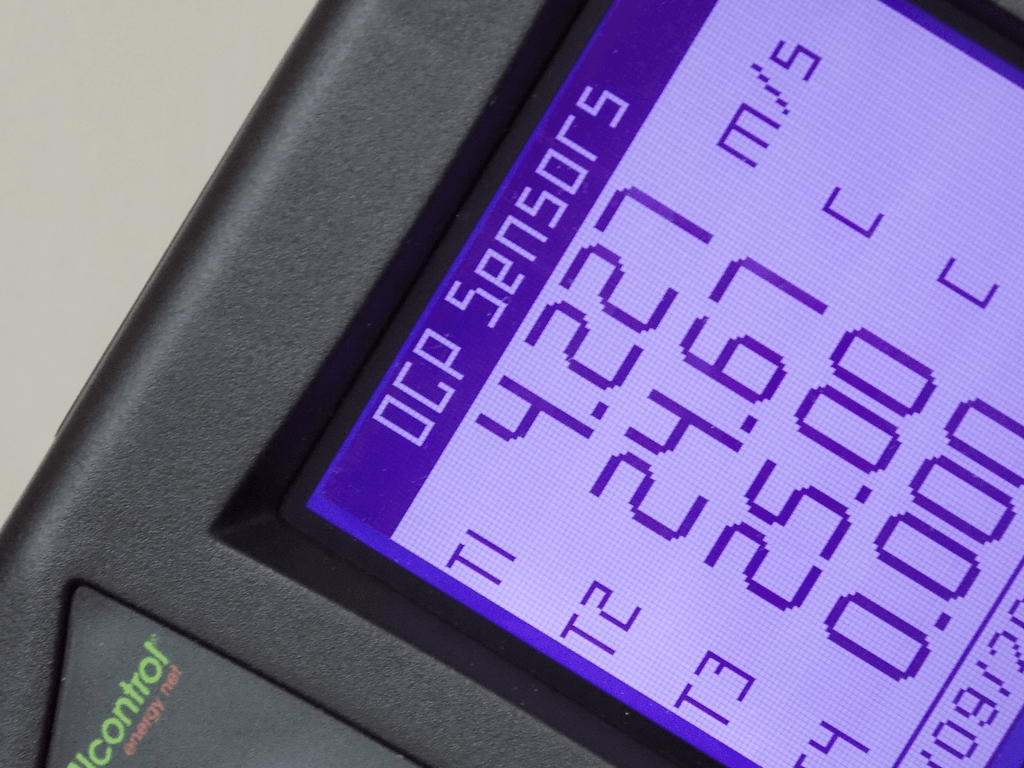
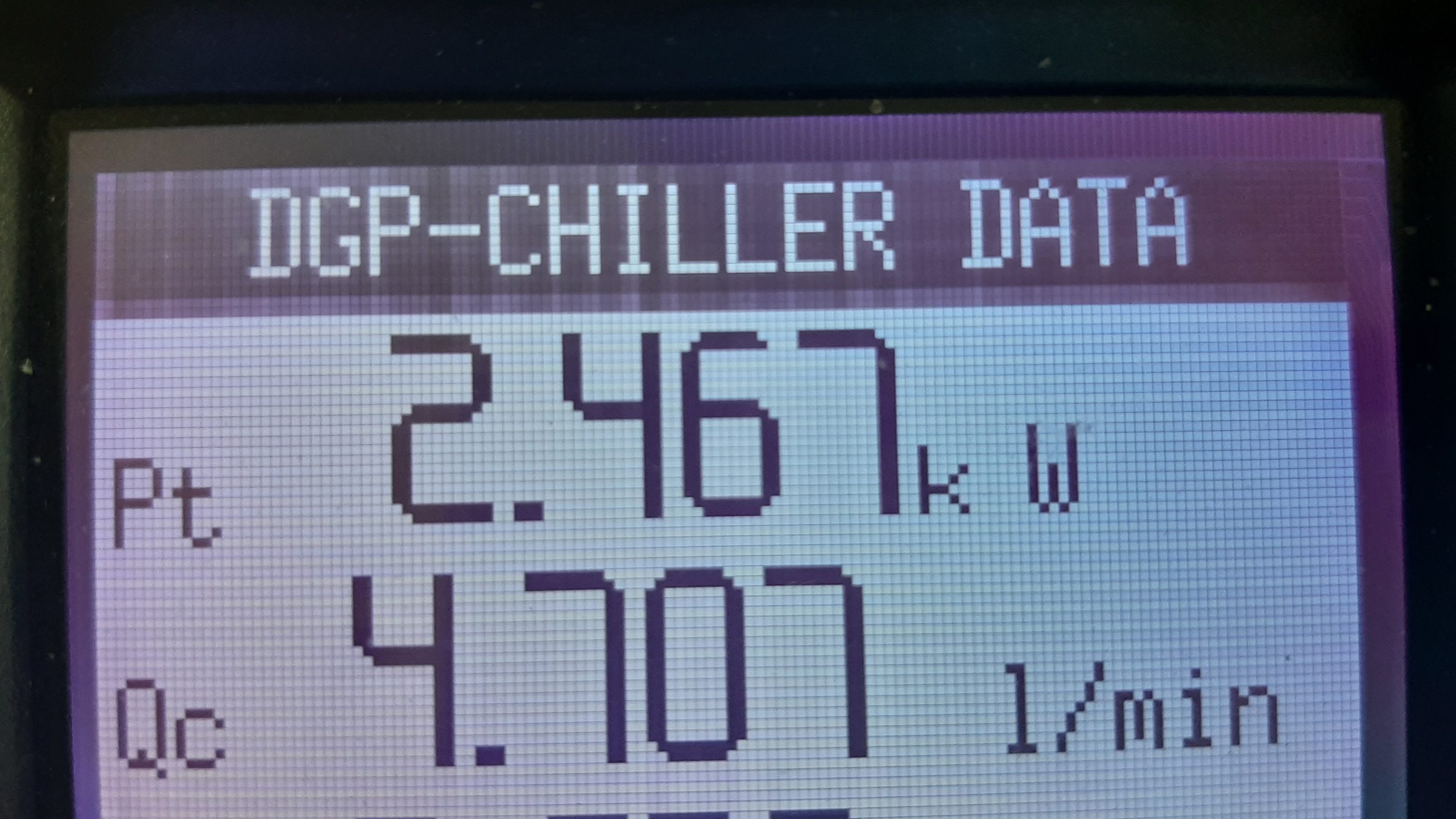

The MRH technology extra benefit for multiset HVAC systems
Your HVAC system includes more sets? No problem. NanoVIP QUADRA measuring system can link up to 5 HVAC sets in a single measuring network thanks to its MRH wireless technology, returning a single, synchronized survey where each HVAC data are included for a complete and detailed energy quality analysys of the overall system.
Economic and Operational Benefits
The primary convenience of this dual-measurement approach is ROI (Return on Investment). High-efficiency monitoring allows for “Demand Side Management,” enabling facilities to shift loads to off-peak hours. Furthermore, it facilitates predictive maintenance. If the system shows that the power input is rising while the cooling output remains stagnant, it’s a clear signal that the chiller needs servicing.
In conclusion, leveraging ultrasonic technology and electrical monitoring transforms a “black box” chiller into a transparent, manageable asset. It provides the data-driven insights necessary to reduce carbon footprints and slash operational costs without the headache of invasive plumbing work.


Contact us for more info or demo
Contact us at:
- email: sales@elcontrol-energy.net
- phone: +39 051 6782006
Recommended Posts